Resources for Families
Practical information, strategies, and links to support your family's journey. Remember, you're not alone—we're here to help.
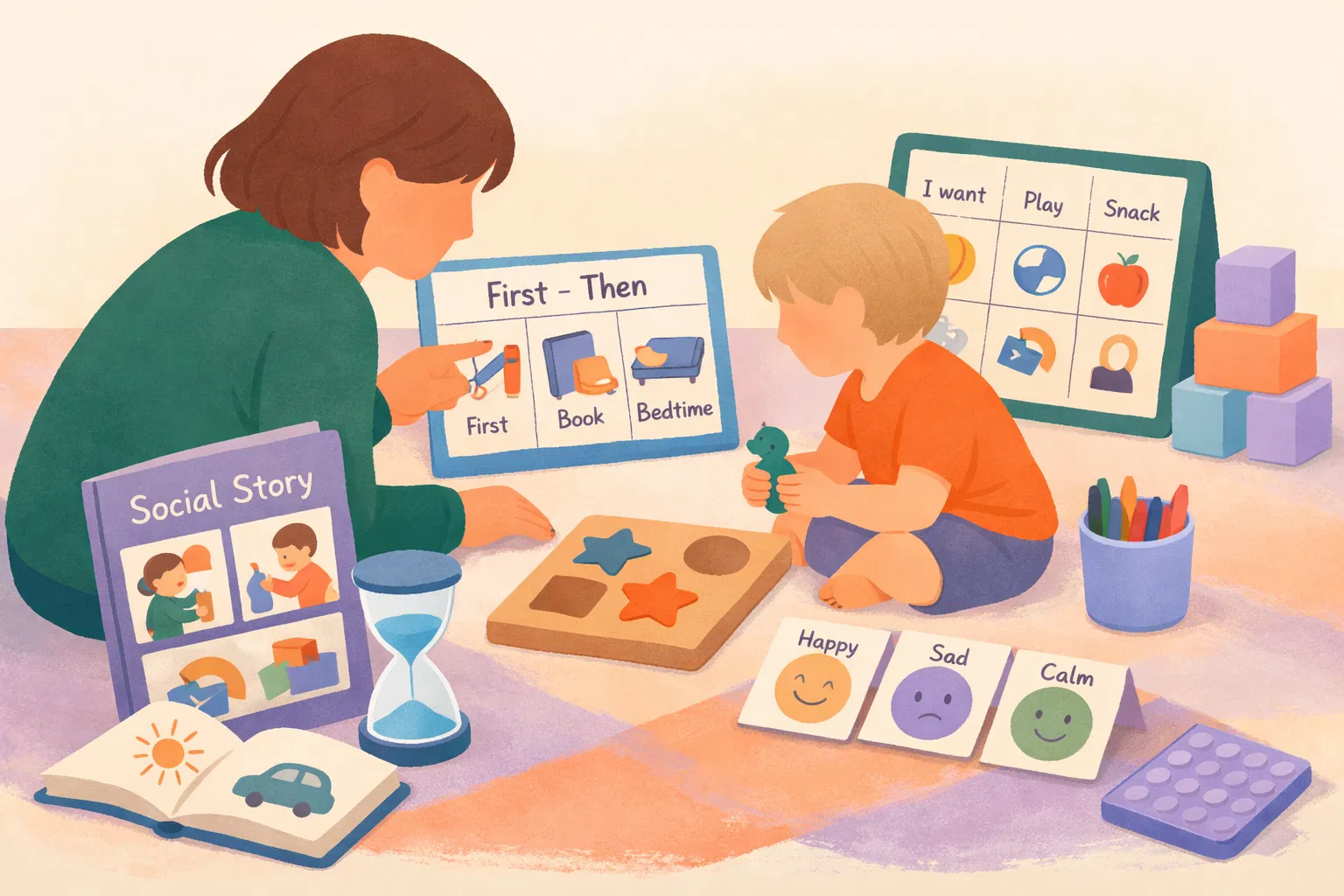
Visual Supports
What Are Visual Supports?
Visual supports are tools that help children understand routines, expectations, and transitions. They can include picture schedules, social stories, and visual timetables.
Practical tips:
- ✓Use clear, simple images or symbols
- ✓Keep language simple and concrete
- ✓Place supports where your child can easily see them
- ✓Use consistently across environments
Creating Effective Social Stories
Social stories help children understand social situations and expectations. They use a narrative format to explain what to expect and how to respond.
Practical tips:
- ✓Use first-person perspective ("I") when possible
- ✓Include specific details about the situation
- ✓Describe the expected behaviour and why it matters
- ✓Practice the story before the event
Parent Support
Managing Parental Burnout
Supporting a neurodivergent child can be rewarding and challenging. It's important to prioritise your own wellbeing.
Practical tips:
- ✓Set realistic expectations and celebrate small wins
- ✓Build a support network of understanding people
- ✓Take breaks and practice self-care without guilt
- ✓Connect with other parents who understand your journey
- ✓Seek professional support when you need it
Understanding Your Child's Needs
Every child is unique. Understanding your child's specific needs, strengths, and challenges is the first step to supporting them effectively.
Practical tips:
- ✓Observe your child in different environments
- ✓Notice patterns in their behaviour and responses
- ✓Ask questions and share observations with professionals
- ✓Trust your knowledge of your child
- ✓Remember that needs can change over time
Practical Strategies
Supporting Emotional Regulation
Help your child develop tools to understand and manage their emotions in a supportive way.
Practical tips:
- ✓Teach emotion identification and naming
- ✓Create a calm-down space with sensory tools
- ✓Use visual emotion scales or charts
- ✓Practice coping strategies during calm times
- ✓Validate emotions while setting boundaries on behaviour
Building Independence Skills
Support your child to develop independence in daily living skills at their own pace.
Practical tips:
- ✓Break tasks into small, manageable steps
- ✓Use visual supports to guide the process
- ✓Celebrate effort and progress, not just perfection
- ✓Practice consistently in real-life settings
- ✓Gradually reduce support as confidence grows
Trusted Resources & Links
Developmental Education Australia Ltd
Australian resource for developmental education practice and evidence-based approaches.
Autism Australia
Comprehensive resources and support for families of autistic children in Australia.
ADHD Australia
Information, support, and resources for families affected by ADHD.
Raising Children Network
Evidence-based parenting information and support for Australian families.
NDIS (National Disability Insurance Scheme)
Information about NDIS funding and support for people with disability in Australia.
Neurodiversity Hub
Resources promoting neurodiversity-affirming practice and understanding.
You're Not Alone
Supporting a neurodivergent child is a journey, and it's okay to need help along the way. Whether you're looking for practical strategies, emotional support, or just someone who understands—we're here for you.
If you have questions about any of these resources or need personalised support, please don't hesitate to reach out. We're always happy to chat.